


 English
 中文简体

The Complete Guide to Fabric Stiffening Agents: Selection, Chemistry, and Application
Content
Twelve rolls of polyester curtain fabric sit in quarantine because the drapability test failed, and the rejection report names the fabric stiffening agent as the suspect. The same product performed perfectly on the previous shift, so the real cause is a process variable, not the chemistry. Fabric stiffening agents are among the most-used finishing auxiliaries for upholstery, interlinings, shoe uppers, hat bodies, and rigid denim, yet most finishing teams dose them by habit rather than by measurement. This guide explains what a fabric stiffening agent is, how its polymer chemistry controls hand feel, how to select a grade for a dyehouse, and how to set pad-dry-cure parameters that hold the approved bending length on every roll.
What Is a Fabric Stiffening Agent and How Does It Work?
A fabric stiffening agent is a film-forming polymer dispersion or solution applied to a textile to increase its flexural rigidity, body, and dimensional stability without chemically changing the fibre itself.
The mechanism is physical. During padding, polymer particles enter the yarn structure; when water evaporates in the dryer, they coalesce into a continuous film that welds fibre crossover points, blocking the sliding and rotation that make fabric feel limp. Polymer glass-transition temperature (Tg) and add-on level control the result: a higher Tg gives a harder feel, and more polymer gives a stiffer board.
On a 100 g/m2 cotton, 20–80 g/L in the pad bath spans the range from a soft body finish to a firm, tailorable hand. Below 20 g/L the film cannot weld crossover points consistently; above 80 g/L the fabric turns boardy, difficult to sew, and prone to film cracking.
Fabric Stiffening Agent Chemistries: A Performance Comparison
Four chemistries dominate industrial fabric stiffening agents: waterborne polyurethane, vinyl acetate copolymer, acrylic resin, and modified starch or PVA. They differ more in durability and yellowing than in maximum achievable stiffness.
| Chemistry | Hand feel | Wash durability | Yellowing risk | Typical end use |
| Starch / PVA | Crisp, boardy | Low: washes out in one cycle | Medium | Temporary stiffening, craft textiles |
| Acrylic resin | Hard, dry | Medium: cracks with age | Medium-high above 160°C | Rigid interlinings, hats, belts |
| Vinyl acetate copolymer | Firm, slightly flexible | Medium-high | Low | Curtains, apparel, general finishing |
| Waterborne polyurethane | Firm but elastic | High: 20+ washes | Very low | Shoe uppers, bags, waistbands |
Graph 1. Relative stiffness retention of four fabric stiffening agent chemistries after five industrial wash cycles, indexed to the freshly cured finish at 100.
The practical takeaway is the durability axis. Starch and PVA deliver the crispest hand available but dissolve in the first wash. Acrylic films survive washing but embrittle with age and yellow when cured above 160°C. Vinyl acetate copolymers sit between the two: firm, low yellowing, and tolerant of repeated laundering. Waterborne polyurethane forms an elastic film that follows fabric bending without cracking, which makes it the default for shoe uppers, bags, and waistbands.
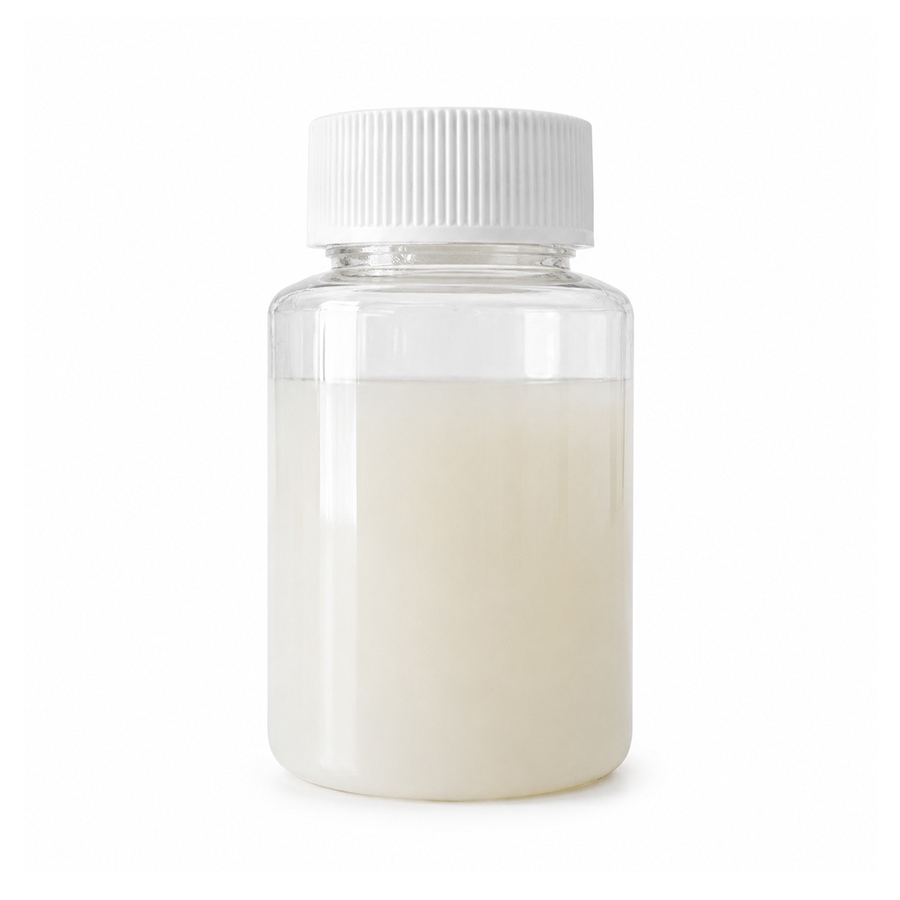 Waterborne Polyurethane Stiffening Agent for Fabrics and WebbingThis elastic film-forming stiffener suits shoe uppers, bags, and waistbands. It is waterborne, low-cost, and free of harmful chemicals, providing firmness without cracking or re-softening after washing.View Product →
Jiangyin Huanan New Materials Technology Co., Ltd., a textile finishing auxiliary manufacturer operating since 1984 with a combined annual capacity of 60,000 tonnes, supplies this stiffness range as low-formaldehyde and formaldehyde-free grades for export-oriented finishing plants.
How to Select a Fabric Stiffening Agent for a Dyehouse
Select a fabric stiffening agent against four measurable criteria: target bending length, fibre and construction compatibility, application equipment, and chemical compliance limits. Price per kilogram tells you almost nothing about any of these.
Fibre and construction compatibility
Cotton, rayon, and linen anchor polymer films well because their hydrophilic surfaces grab the film. Polyester and nylon need a film former with lower surface tension and real adhesion to hydrophobic fibres, which is why vinyl acetate and polyurethane outperform acrylics on synthetics. Verify on the exact blend ratio, because a film that bonds to polyester can delaminate from cotton in the same mixed fabric.
Target hand feel and cut-and-sew limits
Define the bending length range before ordering. If the fabric is cut on high-speed machines, set a maximum stiffness as well: an over-crosslinked boardy film breaks needles on interlining and collar assembly lines.
Application equipment available
Padding at 60–80% wet pickup is the reliable route. Spray and foam application fit localised stiffening, such as collar interlinings and hat brims, but require high-solids grades. Exhaust in a jet or winch rarely works with standard dispersions because the polymer particles have no fibre affinity; only cationically modified starch or polyurethane dispersions exhaust onto cellulosics.
Compliance limits and supply data
Export programmes require formaldehyde-free and APEO-free finishing. Japan Law 112 and OEKO-TEX Standard 100 set the formaldehyde ceiling at 75 ppm for direct-skin apparel. Ask for formaldehyde content, pH, and residual monomer data, and confirm the solids percentage: a product at 25% solids needs a higher bath weight than one at 40% solids for the same dry add-on.
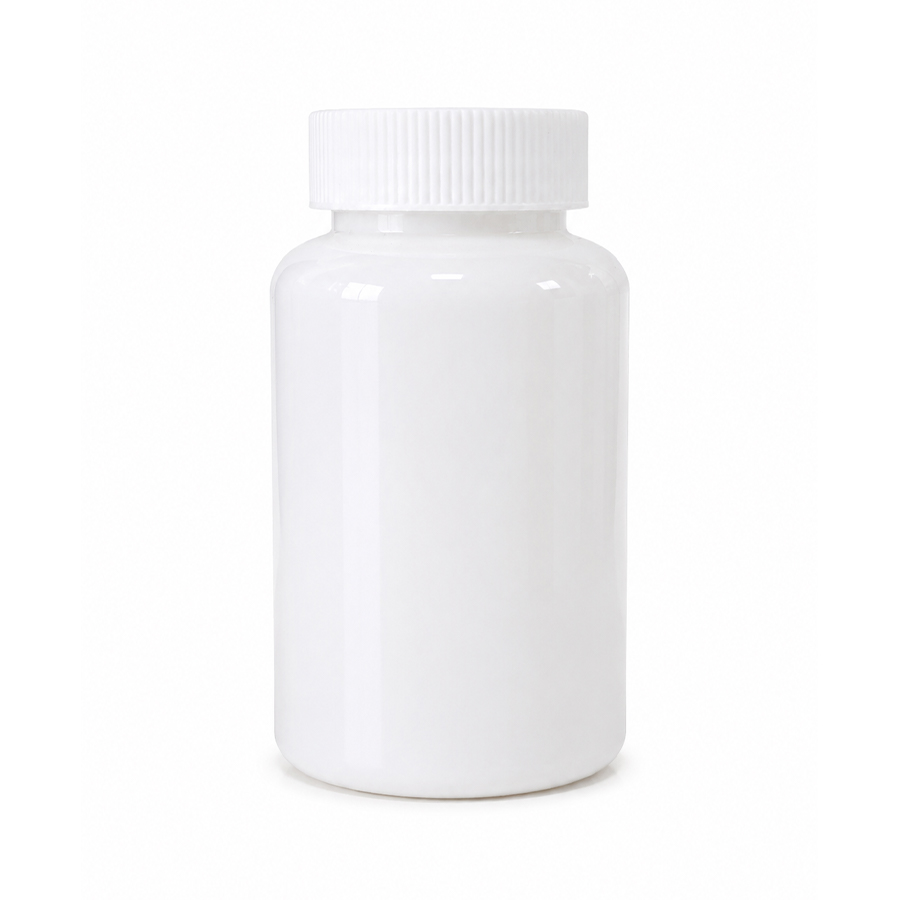 Formaldehyde-Free Acrylate Stiffening Agent for Fabric FinishingAn environmentally friendly acrylate polymer that replaces conventional resins. It delivers full hand feel, elasticity, and improved color fastness, while meeting strict export formaldehyde limits.View Product →
Application Process: Padding, Drying, Curing
The pad-dry-cure sequence decides finish quality more than the polymer chemistry does, because the way the film forms controls whether the stiffness survives the first wash.
- Prepare the pad bath. Dose the fabric stiffening agent at 20–80 g/L (or per the technical data sheet), filter through an 80-mesh screen, and recirculate gently. High-shear pumps shear-coagulate most dispersions and deposit sticky residue on the nip rollers.
- Pad at a uniform 60–80% wet pickup. Set the nip pressure before the run and verify pickup across the width; a 10% variation can push the finished bending length outside tolerance.
- Dry at 100–120°C in a stenter or hot-flue dryer without letting the fabric touch hot cans before the film is dry. The critical risk is migration: polymer travels to the surface as water evaporates, creating face-and-back stiffness differences.
- Cure at 140–170°C for 30–90 seconds depending on machine speed and polymer. Curing fuses the particles into a water-insensitive film; a stiffener cured below its minimum film-forming temperature will soften dramatically in the first wash.
Marginal cure at 120°C
Film stays discontinuous. Stiffness retention after three washes drops to 40–60%. Dusting appears during slitting. Initial hand feels softer than planned.
Full cure at 160°C
Film coalesces at fibre crossovers. Retention stays at 85–95% after five washes. Hand is stable, dusting is minimal, and the finish survives cutting, storage, and use.
| Defect | Likely cause | Correction |
| Edge-to-center stiffness variation | Uneven nip pressure or bath stratification | Recalibrate the paddler; increase bath recirculation |
| Dusting during slitting or cutting | Over-cured acrylic or starch film | Lower cure temperature; switch to vinyl acetate or PU |
| Yellowing on white or pastel goods | Cure temperature above polymer limit | Reduce temperature; use a non-yellowing grade |
| Stiffness loss after the first wash | Under-curing or wrong chemistry | Verify cure temperature; raise add-on; change polymer |
For plants that want the same stiffness with lower storage and transport cost, high-concentration low-formaldehyde products are the economical route: a 50% solids concentrate delivers more dry polymer at the same bath weight as a 30% standard grade.
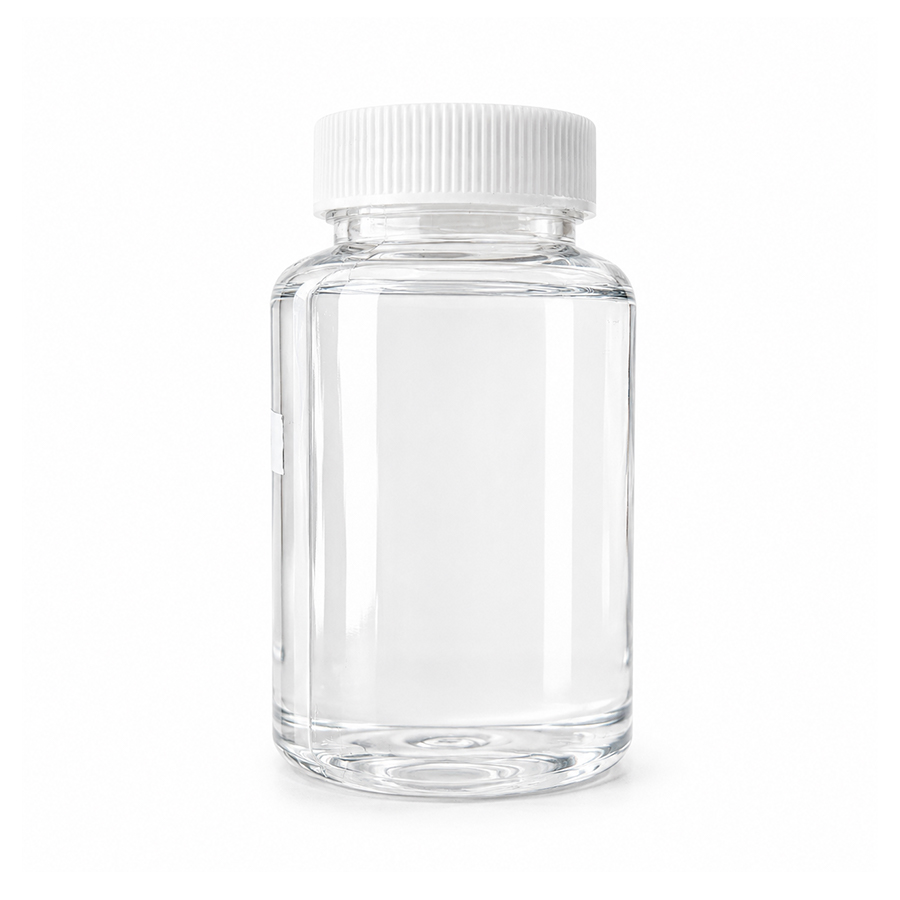 High-Solids Low-Formaldehyde Melamine Resin StiffenerAn 80% solids modified melamine resin with free formaldehyde below 0.3%. Its concentrated formula reduces storage and transport costs per unit of stiffness, while maintaining good water solubility and stability.View Product →
Frequently Asked Questions
Does a fabric stiffening agent survive repeated laundering?
Only synthetic film-formers do. Starch and PVA wash out almost completely in the first cycle. Acrylic keeps some stiffness but cracks after repeated flexing. Vinyl acetate copolymers typically hold 70–80% of initial stiffness after five industrial washes, and waterborne polyurethane holds 85–95% under the same test.
Can I use a fabric stiffening agent on denim and finished garments?
Yes. Stiffening is applied after dyeing, washing, and drying. Rigid denim is run through the stenter with a vinyl acetate or polyurethane stiffener at 30–60 g/L to restore the boardy hand removed by enzyme washing. The same products work in rotary drum garment finishing if the drum is flushed immediately after the cycle. Anti-backstaining and enzyme chemistry used upstream in denim wet processing chemicals do not interfere with the later stiffener bath.
How much fabric stiffening agent should I start with in the pad bath?
Start at 20 g/L for light body, 50 g/L for a medium tailorable finish, and 80 g/L for a firm full hand. Run a lab pad trial at three concentrations, measure bending length after curing and after one wash, and compare with the approved swatch. When scaling up, hold the same wet pickup percentage; gram-per-metre add-on alone is misleading if padder pressure differs from the lab unit.
Is a formaldehyde-free fabric stiffening agent as strong as a conventional one?
Yes. Waterborne polyurethane and vinyl acetate copolymers reach the same stiffness range as urea-formaldehyde and melamine-formaldehyde stiffeners on cotton, polyester, and blends. The difference sits on the durability and cost axes, not the stiffness axis, so the substitution requires a cure-temperature check and a wash-retention test rather than a formulation compromise.
Process assumption: the fabric stiffening agent is applied after dyeing and any enzymatic or softening step, and the pad bath pH stays within the 6–8 range stated on the supplier's technical data sheet.

Contact us
huanannewmaterials@gmail.com
-
 Phone: +86 - 13861620767
-
 Fax: +86-0510-86200939
-
 298 Hongxing Road, Huashi Town, Jiangyin City, Wuxi City, Jiangsu Province, China
Product links
Mobile App
Copyright © Jiangyin Huanan New Materials Technology Co., Ltd. All Rights Reserved

-
huanannewmaterials@gmail.com
-

-

-
+86 - 13861620767