


 English
 中文简体

How to Choose the Right Antistatic Agent for Textiles: A Practical Buyer's Guide
Content
- 1 How an Antistatic Agent for Textiles Works
- 2 Cationic, Nonionic, or Amphoteric: Choosing the Antistatic Agent for Textiles
- 3 Selection Criteria for Antistatic Agents: Fibre, Humidity, and Process
- 4 Application Methods and Dosage for Antistatic Agents
- 5 Compliance, Durability, and Supplier Qualification
- 6 Antistatic Agent for Textiles: Frequently Asked Questions
In January, a polyester fleece line in a coastal Jiangsu dye house recorded 11 kV of static charge at the roll-off station. Stackers misfed, lint stuck to the web, and operators felt every discharge through their gloves. The greige was unchanged; the only difference was a finish recipe that quietly removed the antistatic agent for textiles. Static on 100% synthetic fibre is not cosmetic: above 2 kV it attracts dust, above 5 kV it disturbs sensors, and above 10 kV it is an operator hazard.
An antistatic agent for textiles is a chemical finish that lowers surface resistivity and accelerates charge decay on fibre surfaces by forming a hygroscopic, ionically conductive layer. This guide covers how these products work, how to choose between cationic, nonionic, and amphoteric types, and the dosage rules that survive contact with production.
How an Antistatic Agent for Textiles Works
An antistatic agent for textiles works by creating a thin conductive path on the fibre surface so charge leaks away before it accumulates. Most topical antistats are hygroscopic molecules that absorb atmospheric moisture, and the adsorbed water layer carries mobile ions. The same polar finish reduces friction against machine parts, cutting charge generation at the source.
Untreated polyester fabric sits near 1x10¹⁴ ohms/sq; nylon is only slightly better. When surfaces rub, electrons remain trapped and voltage builds until discharge. The standard acceptance target in finishing is surface resistivity below 1x10¹⁰ ohms/sq and a charge half-life below 2 s. Untreated polyester at 25% relative humidity shows a half-life of hundreds of seconds.
Humidity sets the severity. Charge builds fastest between 20% and 30% RH, which is why static complaints spike in winter and why export knitwear for dry continental markets needs a finish validated at low humidity. At 65% RH, atmospheric moisture masks a weak finish until the season changes.
Static charge decay is the rate at which an excess charge dissipates after grounding. A half-life below 2 s per AATCC 76 or JIS L 1094 is the standard threshold for apparel acceptance; anything above 10 s will feel active to a wearer or a machine.
Cationic, Nonionic, or Amphoteric: Choosing the Antistatic Agent for Textiles
Choose the ionic type of an antistatic agent for textiles by matching it to the fibre and to everything else in the finishing bath, because incompatibility fails faster than any performance gap.
| Ionic type | Chemistry family | Charge decay | Main trade-off |
| Cationic | Quaternary ammonium | Fastest, below 1-3 s | Heat yellowing, anionic conflict |
| Nonionic | Ethoxylated esters | Moderate, 5-10 s | Weakest durability |
| Amphoteric | Betaine structures | Fast, 2-5 s | Higher price, balanced profile |
| Anionic | Phosphate esters | Moderate, 5-15 s | Less common as sole antistat |
Cationic quaternary ammonium: fastest decay on synthetics
Cationic quaternary ammonium compounds are the workhorses of synthetic-fibre finishing. At 20-30 g/L padding they deliver charge half-lives below 1 s on polyester and acrylic. Trade-offs: yellowing on whites if cure passes 150°C, and flocculation if the bath also contains anionic softeners or dye residues.
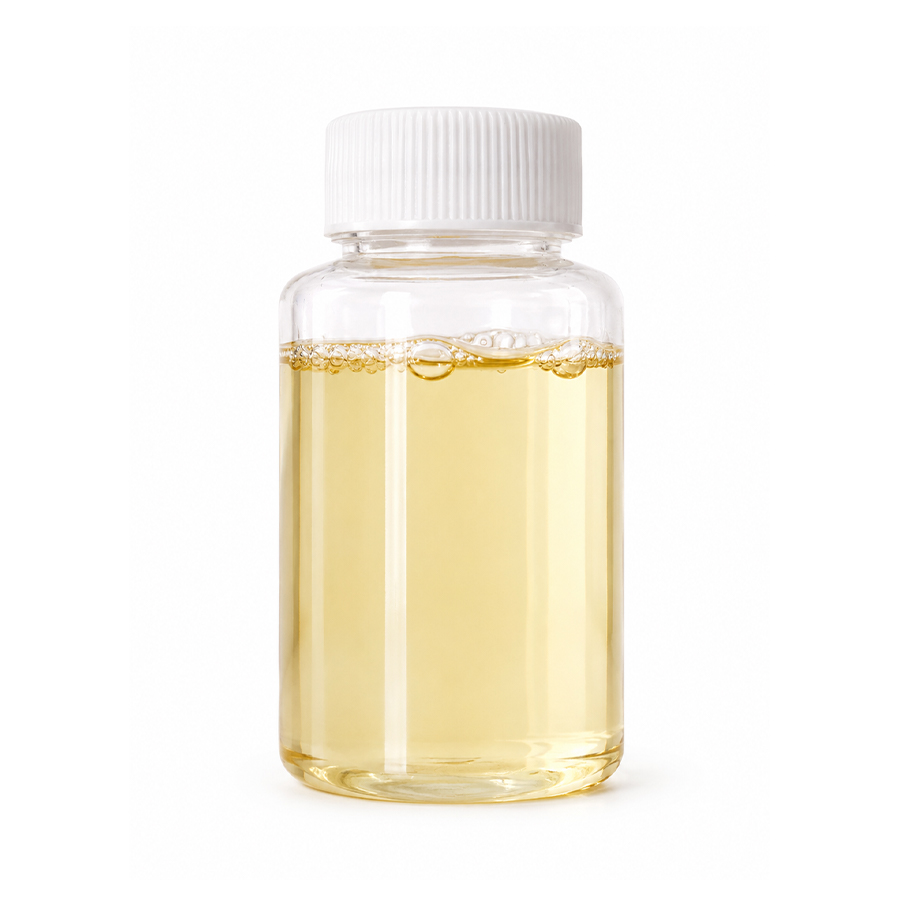 Cationic Antistatic Agent SN770 for Synthetic FibersThis modified amine compound suits polyester and acrylic finishes, offering low-dose antistatic performance without yellowing. Its compatibility with fixing agents and silicone oils makes it a reliable pick for demanding baths.View Product →
Nonionic ethoxylates: safe compatibility, softer effect
Nonionic ethoxylates and fatty esters are the safest choice when the antistat shares a bath with anionic auxiliaries. There is no yellowing and no ionic shock on sensitive dyestuffs, but decay is slower and durability weaker, so dosage climbs to 30-40 g/L in demanding constructions.
 Non-Ionic Antistatic Agent RY645 with Broad CompatibilitySafe alongside anionic auxiliaries, this non-ionic blend provides rapid antistatic effects at 5-15 g/L and boosts anti-pilling by 0.5 level. Ideal for sensitive dyestuffs and mixed-fiber programs where ionic shock is a concern.View Product →
Amphoteric betaine structures combine anionic and cationic behaviour in one molecule. They tolerate pH swings, offer better rewettability than straight cationics, and suit nylon blends and garment dyeing programs where the antistat is the first ingredient blamed in a complaint.
Selection Criteria for Antistatic Agents: Fibre, Humidity, and Process
Start your selection with the fibre, the end-market humidity, and every finishing step that follows, because each variable moves the product class by at least one level.
Nylon deserves a separate note. Its surface generates enough static to disturb winding and cutting, and a nylon-specific blend tested on the actual construction is the difference between a roll that sheets cleanly and one that clings to every guide roll.
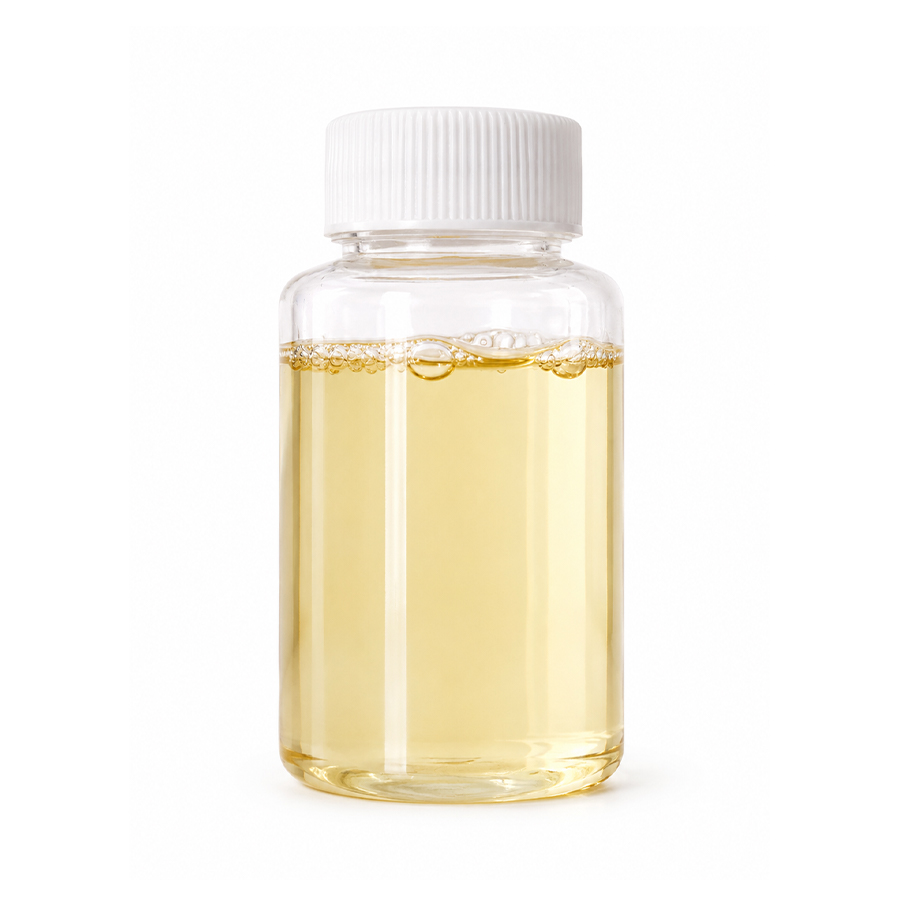 Nylon-Specific Antistatic Agent HN650 for TaffetaDeveloped for nylon taffeta, this long-chain polymer minimizes static, lint, and adhesion while barely affecting water repellency. A tailored choice for constructions where nylon's static disturbs winding and cutting.View Product →
Rule of thumb: if a static complaint disappears at 65% RH and returns in the dry season, the finish is too shallow. Increase add-on by roughly 30% before switching chemistry, then re-test at the customer's lowest seasonal humidity.
For the mechanics of test methods, standard concentrations, and failure modes, the material-science overview in our application methods and selection guide covers the subject in more depth.
Application Methods and Dosage for Antistatic Agents
Apply by padding on continuous woven lines, by exhaustion on knits and garments, or by spray on nonwovens, and calculate dose against wet pickup rather than liquor volume.
| Method | Wet pickup | Starting dose | Best suited for |
| Pad-dry-cure | 60-80% | 15-30 g/L product | Woven fabrics, continuous lines |
| Exhaustion | Liquor ratio 1:10-1:20 | 1-3% owf | Knitgoods, garments, hosiery |
| Spray and foam | Low pickup 10-30% | 20-40 g/L as sprayed | Upholstery, nonwovens, technical |
A typical pad-dry-cure program looks like this:
Exhaust dosage is calculated on fibre weight. A 1.5% owf exhaust application can match a 20 g/L pad, but only when the liquor ratio stays below 1:15 and the bath pH stays below 7 for cationic products.
Compliance, Durability, and Supplier Qualification
Buy an antistatic agent for textiles on documented compliance and batch consistency, not price per kilogram; one container of off-spec finish can cancel a season of margin.
Export mills face tightening limits on APEO, formaldehyde, and restricted amines. Before trialling, request an SDS and a COA stating ionic charge, pH, active matter, and residual formaldehyde. APEO-free and formaldehyde-free products simplify OEKO-TEX documentation, and ISO 14001 and ISO 45001 suppliers reduce audit friction.
Match durability to the product class. Standard topical agents keep 60-80% of their effect through 5-10 launderings, then decay climbs. Workwear, automotive, and upholstery programs need durable hydrophilic grades validated by repeated launderings.
One production-ready example is Jiangyin Huanan New Materials Technology Co., Ltd., a textile auxiliaries manufacturer founded in 1984 with two plants and a combined annual capacity of 60,000 t. That scale means application data, reference formulations, and batch consistency that keep a new antistatic program reproducible.
Antistatic Agent for Textiles: Frequently Asked Questions
What is the strongest type of antistatic agent for textiles?
Cationic quaternary ammonium gives the fastest decay on synthetics, often below 1 s at standard doses. If the bath contains anionic auxiliaries, choose a nonionic or amphoteric type because it stays stable and actually works.
How much antistatic agent should be applied to polyester?
Start at 15-30 g/L padding at 60-80% pickup, or 1-2% owf exhaustion, then measure decay at 25% RH. If decay stays above 2 s, raise add-on by 30% and check pH and pickup first.
Are antistatic finishes wash-durable?
Standard topical agents hold 60-80% of their effect through 5-10 washes, then drop quickly. Long-life programs need durable hydrophilic grades plus lab validation after laundering.
Do antistatic agents affect handle or shade?
Cationic types can yellow on whites cured above 150°C; nonionic types are safer for shade-critical work. Evaluate handle after drying, not in the wet state.

Contact us
huanannewmaterials@gmail.com
-
 Phone: +86 - 13861620767
-
 Fax: +86-0510-86200939
-
 298 Hongxing Road, Huashi Town, Jiangyin City, Wuxi City, Jiangsu Province, China
Product links
Mobile App

-
huanannewmaterials@gmail.com
-

-

-
+86 - 13861620767