


 English
 中文简体

Textile Stiffening Agent Selection: Polymer Types, Application and Compliance
Content
- 1 What a Textile Stiffening Agent Actually Changes in Fabric
- 2 Four Polymer Chemistries Compared for Stiffening
- 3 Selecting a Textile Stiffening Agent by Fabric and End Use
- 4 Pad-Dry-Cure Parameters That Determine Results
- 5 Environmental Compliance Is a Technical Specification
- 6 Frequently Asked Questions
A European workwear weaver swapped a starch-based stiffener for a waterborne polyurethane textile stiffening agent on a 240 g/m² polyester-cotton twill line. Re-treatment rates fell from 12 percent to 1.8 percent in three months, while the fabric kept its 500-gram bending-length specification through industrial laundering. Two decisions produced that result: the right polymer family, and a re-tuned pad line.
This guide covers how textile stiffening agents work, how the four main polymer chemistries differ, and how to select and apply a grade without plant-floor guesswork.
What a Textile Stiffening Agent Actually Changes in Fabric
A textile stiffening agent is a film-forming polymer formulation that increases the bending rigidity of a woven or knitted fabric while leaving tensile strength essentially unchanged.
The polymer deposits on fiber surfaces and at yarn crossover points. After drying, and curing for cross-linking grades, it restricts yarn sliding and rotation under load. Finishers measure this as bending length (ASTM D1388) or drape coefficient. Higher bending length means a crisper handle; a high drape coefficient means the fabric hangs like a board.
- Bending rigidity: bending length can move from about 4 cm to more than 10 cm on cotton at 3 percent add-on.
- Drape: the coefficient shifts toward the structural range in canvas weights, which is why stiffened curtains keep their shape.
- Surface friction: the film raises fabric-to-fabric friction, improving interlining adhesion but complicating sewing if overdosed.
These effects explain most hand-feel complaints in finishing: the fabric is not faulty, the stiffening balance is off.
Four Polymer Chemistries Compared for Stiffening
The polymer family decides how firm the finish feels on the first day and how much of that stiffness survives the first five washes.
Four chemistry families cover most industrial stiffening demand.
| Criteria | Waterborne PU | Vinyl acetate | Acrylic ester | Starch-based |
| Initial hand feel | Firm, crisp | Firm to harsh | Medium firm | Very hard |
| Stiffness after 5 washes | High | Moderate | Moderate to low | Very low |
| Drape and flex endurance | Good | Limited | Medium | Poor |
| Yellowing on white | Low | Low | Low | Low |
| Formaldehyde content | Free | Free (this type) | Low options | Free |
| Typical end uses | Workwear, caps, shoe lining | Interlinings, canvas | Curtains, bags | Temporary backing |
Where each chemistry fits
Waterborne polyurethane earns its higher price when wash durability is part of the acceptance test. Vinyl acetate copolymers are the low-cost workhorse for interlinings that need a firm cut edge. Starch survives where stiffness is temporary, such as embroidery backing washed out later.
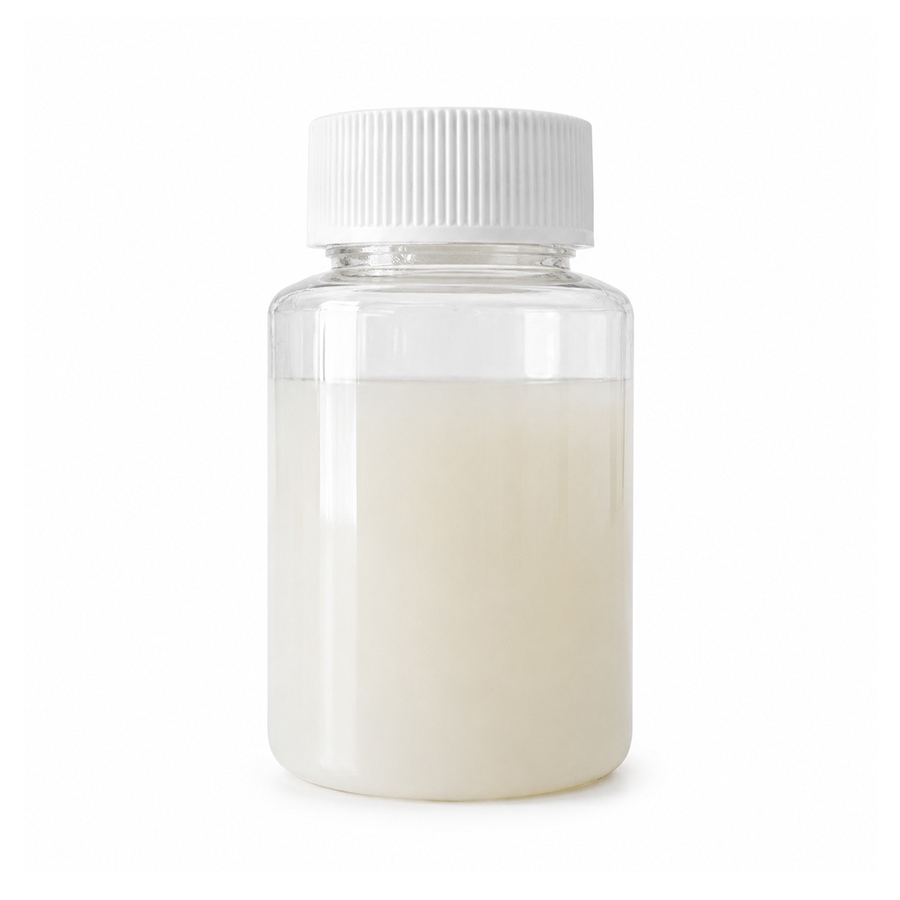 Waterborne Polyurethane Stiffening Agent for Fabric and WebbingThis waterborne stiffening agent offers high hardness and wash durability, making it suitable for webbing and fabric after-treatment where permanent stiffness is required without re-tackiness or color loss.View Product →
Selecting a Textile Stiffening Agent by Fabric and End Use
Selection starts with the care label and the end-use loading, not with the hand-feel swatch on your desk.
Five criteria narrow the choice faster than any sample panel.
- Fiber type: cotton and viscose absorb more bath liquor; polyester and nylon need polymers that bond to smooth, low-energy surfaces.
- Fabric weight: heavy canvas reaches target stiffness at low add-on; lightweight voile needs precise low-pick-up control.
- End use: interlinings want crispness plus sewability; hat brims want permanent rigidity; curtains want a structured but flexible drape.
- Care regime: industrial laundering requires cross-linked polyurethane; occasional gentle washing can accept vinyl acetate.
- Color and compliance: white and pastel goods exclude yellowing, formaldehyde-containing or APEO-containing grades.
For a cotton shirting mill producing collar interlinings, a vinyl acetate copolymer at 30-60 g/L in the pad bath is a defensible starting point. For workwear that must hold shape through 50 industrial washes, the specification belongs to waterborne polyurethane.
The same logic applies to the broader family of finishing auxiliaries, where durability, cost and compliance trade against each other.
Pad-Dry-Cure Parameters That Determine Results
Pick-up rate, drying temperature and curing time alter final stiffness more than a 10 percent change in bath concentration does.
The standard route is pad-dry-cure, and five parameters control most of the outcome.
- Bath preparation: dilute concentrates with soft water, adjust pH to the supplier range (typically 6-8), and check viscosity before the shift starts.
- Padding: set the nip so wet pick-up lands at 60-80 percent; uneven pressure shows up as streaky stiffness across the width.
- Drying at 110-130 °C: dry slowly enough to prevent polymer migration to the face, which creates a crusty front and a limp back.
- Curing at 150-170 °C for 60-120 seconds: cross-linking grades need this step for wash durability.
- Conditioning: rest rolls at 20 °C and 65 percent relative humidity for at least 4 hours before measuring, because bending length drifts with moisture.
Stiffness retention after 5 industrial washes
Illustrative values from finishing-line trials of four stiffening polymer families on 200 g/m² cotton canvas, measured as bending-length retention.
Concentrated grades cut freight, storage and weighing errors, and low-formaldehyde versions keep the finishing room inside typical workplace exposure limits.
 High-Concentration Low-Formaldehyde Modified Melamine ResinA concentrated, etherified melamine resin with low free formaldehyde and high solid content, designed for finishing applications where export compliance and workplace exposure limits are key considerations.View Product →
Environmental Compliance Is a Technical Specification
Formaldehyde and APEO content belong in the technical specification, because they determine which export orders a stiffening agent can legally be used on.
OEKO-TEX Standard 100 sets the reference limits most export buyers apply without change.
- Formaldehyde: 16 mg/kg for babywear (class 1), 75 mg/kg for skin-contact textiles (class 2), 300 mg/kg for non-contact goods (class 3).
- APEO: restricted under EU REACH; the technical data sheet should state APEO-free status explicitly.
- Workplace safety: low-formaldehyde grades reduce ventilation load and simplify chemical labeling under GHS.
- Wastewater: starch degrades readily, while cross-linked polyurethane film is harder to break down in biological treatment.
The limits that bind export orders
Export mills increasingly request a batch-level formaldehyde declaration. A supplier that documents APEO-free and formaldehyde-free or low-formaldehyde formulations, such as Jiangyin Huanan New Materials Technology Co., Ltd., removes regulatory risk from the purchase decision.
See our overview of textile dyeing auxiliaries and sustainable dyeing chemistry for the wider picture.
For the middle of the market, a formaldehyde-free vinyl acetate grade delivers a firm handle with a clean declaration.
 Formaldehyde-Free Vinyl Acetate Stiffening Agent for FabricAn acrylate polymer that replaces conventional resins for fabric stiffening and elastic finishing, providing full hand feel, good elasticity, and improved color fastness without formaldehyde concerns.View Product →
Frequently Asked Questions
These are the questions finishing engineers ask most often when a stiffening complaint reaches the lab.
What is the difference between a stiffening agent and a sizing agent?
Sizing protects warp yarns during weaving and is removed in desizing. Stiffening agents stay on the fabric to change handle and structure. Both are film-forming polymers, but the process stage and removal step differ completely.
Why does fabric lose stiffness after washing?
Washing hydrolyzes or swells the polymer film and reorients fibers. Starch dissolves quickly, vinyl acetate weakens progressively, and cross-linked waterborne polyurethane holds its film for dozens of cycles. Wash durability requires a cross-linked network.
Can a stiffening agent be applied to knitted fabric?
Yes, but knitwear needs lower add-on and a more elastic film to avoid a cardboard feel and cracking. Waterborne polyurethane at 20-50 g/L with low pick-up is the usual choice; vinyl acetate is often too rigid.
How do I choose between waterborne polyurethane and vinyl acetate?
Compare the care label, the stiffness target and the permitted cost. Wash-durable products point to waterborne polyurethane. Low-cost interlinings and shelf-display goods are acceptable candidates for vinyl acetate at roughly half the polymer cost.

Contact us
huanannewmaterials@gmail.com
-
 Phone: +86 - 13861620767
-
 Fax: +86-0510-86200939
-
 298 Hongxing Road, Huashi Town, Jiangyin City, Wuxi City, Jiangsu Province, China
Product links
Mobile App
Copyright © Jiangyin Huanan New Materials Technology Co., Ltd. All Rights Reserved

-
huanannewmaterials@gmail.com
-

-

-
+86 - 13861620767