


 English
 中文简体

Silicone Softener for Textiles: Chemistry, Selection & Performance Guide
Content
- 1 Silicone Softener for Textiles: Chemistry Types and What They Deliver
- 2 Yellowing and Whiteness: How Softener Chemistry Changes the Verdict
- 3 Matching Silicone Softener for Textiles to Fabric and End Use
- 4 Process Compatibility: Shear Stability, pH, and Emulsion Quality
- 5 Quantifying Silicone Softener for Textiles: Tests and Benchmarks
- 6 Frequently Asked Questions
When a dyehouse evaluates a new silicone softener for textiles, the first pad trial usually feels soft enough to pass. The real test comes after ten home launderings: fabric finished with a standard amino silicone has lost much of its softness and takes more than three minutes to wet out, while the same fabric finished with a multiblock copolymer stays smooth and absorbs water in under five seconds. That gap is not batch variation. It is the predictable result of silicone chemistry, emulsion quality, and application method.
Silicone softener for textiles is a finishing agent built on a polydimethylsiloxane backbone that forms a low-surface-energy film on fiber surfaces, lowering inter-fiber friction and improving drape and touch. The functional groups attached to that backbone determine softness, durability, hydrophilicity, and yellowing. Mills that choose softeners by price alone usually discover this within the first production run.
Silicone Softener for Textiles: Chemistry Types and What They Deliver
The functional group on the silicone chain is the first attribute to evaluate. Amino groups deliver the strongest softening effect because they bond readily to negatively charged fibers and form a durable film, but they also create yellowing risk and hydrophobicity.
Amino-modified silicones are typically supplied with an amine value between 0.3 and 0.9 mmol/g. Higher values give softer results at lower dosage, but they accelerate yellowing and increase water repellency. Polyether-modified silicones add hydrophilic segments that improve moisture transport, yet they trade away some softness and durability. Multiblock copolymers alternate silicone segments with polyether or polyurethane blocks, preserving much of the softness while substantially reducing yellowing and retaining hydrophilicity. This is why modern product ranges include grades such as multiblock copolymer silicone oil HN578, designed for cotton and synthetic blends that need both softness and absorbency.
 HN578 Multiblock Copolymer Silicone Oil for Blended FabricsThis high-solidity multiblock silicone oil (up to 70% content) is designed for polyester, nylon, cotton, wool, and blends, offering soft, fluffy hand feel while reducing yellowing and retaining hydrophilicity. Its self-emulsifying flexibility suits mills needing customized finishes.View Product →
Manufacturers that serve dyehouses directly, such as Jiangyin Huanan New Materials Technology Co., Ltd., build their silicone softener families around exactly these distinctions. Huanan has manufactured textile auxiliaries since 1984 and operates two plants with 60,000 tons of annual capacity; its catalog separates multiblock, hydrophilic, soft-elastic, and deepening silicone oils so that mills can match chemistry to fabric instead of forcing one grade into every job.
| Chemistry | Softness | Yellowing risk | Hydrophilicity | Wash durability |
| Standard amino, macro-emulsion | Very high | High | Poor | Moderate |
| Amino, micro-emulsion | Very high | Medium | Poor | Good |
| Polyether-modified | Moderate | Low | Good | Moderate |
| Multiblock copolymer | High | Very low | Good to excellent | Very good |
Yellowing and Whiteness: How Softener Chemistry Changes the Verdict
Yellowing is oxidation of amine groups at curing temperature or under light, and it appears first on white, optical-brightened, and pastel fabrics.
Finishing lines that cure at 150 to 180 degrees C for two to three minutes push amine oxidation rates up sharply. A standard amino silicone can raise the b* value by more than three units, while non-yellowing or multiblock grades typically shift less than 1.5 units. For underwear, bedding, and white athletic wear, that difference decides whether a batch is approved or reworked.
Mills running optical brighteners must also check bath compatibility. Cationic amino silicones can react with anionic fluorescent whitening agents and form precipitates that dull the shade and create uneven softening. A non-yellowing fabric softener or a nonionic-modified silicone avoids this reaction entirely.
Matching Silicone Softener for Textiles to Fabric and End Use
Fabric construction and final garment use decide softener selection; most mills need a portfolio of two or three chemistries rather than one workhorse product.
- Cotton jersey and underwear - use hydrophilic, low-yellowing silicone oils that preserve absorbency and pass a wetting test under five seconds after five washes.
- Polyester sportswear and quick-dry knits - combine hydrophilic silicone with moisture management and verify wetting time after repeated laundering.
- Wool and wool blends - use smooth-bright grades that reduce felting and add luster without a harsh handle.
- Denim and heavy cotton - choose non-yellowing, shear-stable grades because enzyme washing adds mechanical stress.
- Towels and plush fabrics - select soft-loose silicones that build bulk and fluff during exhaustion.
Application method changes dosage and product form. Padding uses 20 to 60 g/L at 65 to 75 percent wet pickup; exhaustion uses 2 to 4 percent owf at 30 to 40 degrees C for 20 to 30 minutes at pH 5.0 to 6.0. A product that performs at 40 g/L on a padder may need double that in an exhaust bath because exhaustion is slower. For lightweight cotton knits that demand maximum softness, mills often turn to high-concentration extra-soft grades such as ultra-soft silicone oil HN2000.
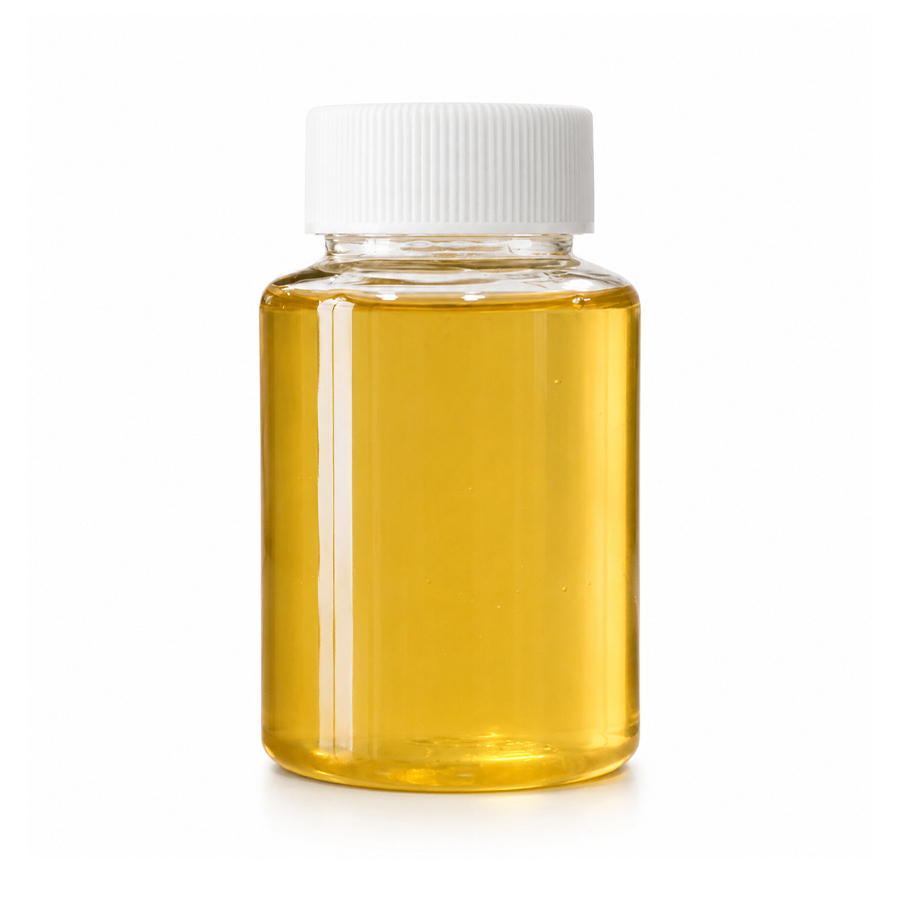
 HN-2000 Ultra-Soft Silicone Oil for Synthetic FabricsA transparent yellow liquid formulated for polyester/cotton, acrylic, lace, brushed fabrics, and synthetic yarns. It can be applied by exhaustion or padding, delivering extra-soft hand feel. Useful for lightweight knits where maximum softness is prioritized.View Product →
For cotton and cotton-blend underwear, a hydrophilic grade such as hydrophilic soft-loose silicone oil HN9880 delivers the absorbency and next-to-skin softness that such garments require.
 HN-9880 Hydrophilic Soft-Loose Silicone OilA block copolymer silicone oil that imparts soft, smooth, and loose comfort to high-count cotton/spandex and long-staple cotton knits. It is environmentally compliant with Oeko-TEX 100, making it suitable for underwear and next-to-skin garments needing absorbency.View Product →
Process Compatibility: Shear Stability, pH, and Emulsion Quality
Shear stability, not initial softness, is the most common cause of silicone softener failures in production.
Jet dyeing machines and high-pressure pumps subject the finishing bath to severe mechanical stress. A micro-emulsion with 20 to 50 nm particle size withstands that load; a coarse macro-emulsion at 100 to 300 nm can break, releasing silicone oil that deposits as gray or oily spots on fabric. Before bulk trials, run a 30-minute shear test at 3000 to 5000 rpm and compare particle size before and after. If the bath turns turbid or particle size grows, reject the grade.
Bath pH is the second most common failure point. Amino silicones are cationic and perform best at pH 5.0 to 6.0; alkaline baths reduce exhaustion and destabilize the emulsion. Mills finishing after an alkaline pretreatment must neutralize before softening. This is why many dyehouses standardize on shear-stable silicone emulsions for jet and overflow machines.
Quantifying Silicone Softener for Textiles: Tests and Benchmarks
Objective measurement beats subjective touch panels: track bending rigidity, wetting time, b* yellowing, and softness retention after laundering to compare softeners fairly.
Bending rigidity is measured with a Shirley stiffness tester or KES-F system; a well-formulated silicone softener reduces cotton bending rigidity by 40 to 60 percent. Wetting time, measured by drop test or AATCC TM 79, should stay under five seconds for hydrophilic finishes after five washes. Yellowing is captured as the b* shift on the CIELAB scale. Wash durability is the share of softness retained after laundering, and it is the metric that separates macro-emulsion amino grades from micro-emulsion and multiblock products.
Softness retention after ten industrial washes by chemistry type
Frequently Asked Questions
Can a silicone softener for textiles be used on every fiber type?
Yes, but with chemistry matched to the fiber. Polyester and nylon accept amino and multiblock silicones readily; wool needs low-yellowing grades; microfiber requires small particle sizes for penetration. Test each fiber type before scale-up.
Why does fabric turn yellow after silicone finishing?
Amino groups oxidize under heat and light, producing colored byproducts. The risk rises with amine value, curing temperature, and exposure time. Switch to a low-amine or multiblock grade, and keep curing below 160 degrees C where possible.
What dosage should a mill start with for padding and exhaustion?
Start at 20 to 60 g/L for padding and 2 to 4 percent owf for exhaustion. Adjust for fabric weight, target hand feel, and wet pickup. Check the certificate of analysis for silicone content, because high-concentration grades need less product.
How do I verify a new softener before bulk use?
Run a shear test at 3000 to 5000 rpm for 30 minutes, compare particle size before and after, measure b* yellowing on white fabric, and complete five accelerated launderings with wetting-time and softness-retention testing.



Contact us
huanannewmaterials@gmail.com
-
 Phone: +86 - 13861620767
-
 Fax: +86-0510-86200939
-
 298 Hongxing Road, Huashi Town, Jiangyin City, Wuxi City, Jiangsu Province, China
Product links
Mobile App
Copyright © Jiangyin Huanan New Materials Technology Co., Ltd. All Rights Reserved

-
huanannewmaterials@gmail.com
-

-

-
+86 - 13861620767